
How to Clean Diamond Rings at Home: A Complete Guide
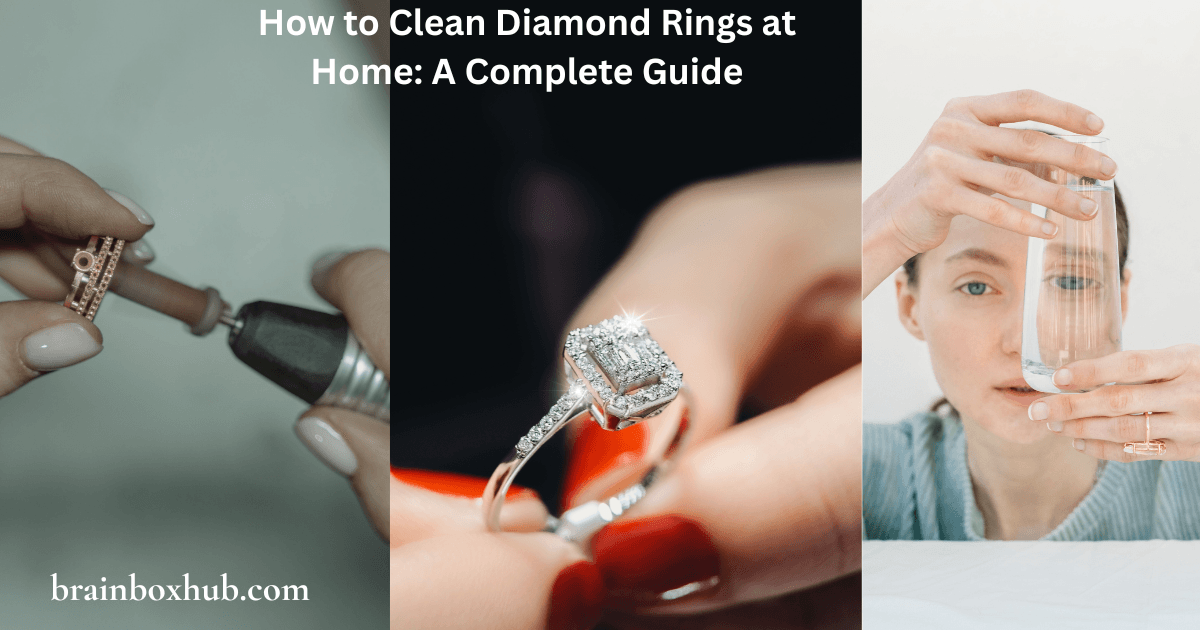

How to Clean Diamond Rings at Home: A Complete Guide
Table of Contents
A diamond ring that’s been worn daily for a few weeks looks dramatically different from a freshly cleaned one. Diamonds attract grease and oils from skin, lotion, and soap — and once a thin film builds up on the surface, the light can’t enter and reflect the way it should. The sparkle that made you fall in love with the ring in the first place disappears behind a dull coating that’s surprisingly easy to fix.
Why diamond rings lose their sparkle
Diamonds are exceptional at one specific thing: reflecting and refracting light in a way that creates brilliance and fire. This only works when the diamond’s surface and underside are clean. Skin oils, hand cream, soap residue, and even water minerals deposit on the stone with every wear, and over time this builds into a visible film. Prong settings are particularly vulnerable because grease accumulates in the gaps around the stone and on the underside of the diamond where it’s hardest to see.
The underside of the diamond matters as much as the top. Light enters through the table (top surface), travels through the diamond, and reflects back up through the facets — if the underside is coated in grease, this process is interrupted and brilliance is reduced.
How often to clean
For a ring worn daily, once every two weeks is a good baseline for home cleaning. A professional clean by a jeweler (which includes checking prongs and settings for wear) is worth doing once a year.
Method 1: Dish soap and warm water (the standard method)
This is the method most jewelers recommend for home cleaning and works for the vast majority of diamond rings.
What you need: a small bowl, warm water, mild dish soap, a soft toothbrush (an old electric toothbrush head works very well), and a lint-free cloth.
Mix a few drops of mild dish soap into warm water. Place the ring in the solution and let it soak for 20-30 minutes — this loosens the grease and oils around the stone and in the setting. Use the soft toothbrush to gently scrub all surfaces: the top of the diamond, the underside through the setting, around each prong, and the band. Pay particular attention to the back of the stone — this is where most of the buildup sits and where cleaning makes the biggest visual difference. Rinse under warm running water (close the drain) and pat dry with a lint-free cloth. Hold the ring up to the light — the difference should be immediately visible.
Method 2: Windex and dish soap (for a deeper clean)
Glass cleaner containing ammonia is safe for diamonds and gold or platinum settings and is particularly good at cutting through stubborn grease buildup.
Spray a small amount of Windex onto the ring, add a drop of dish soap, and scrub gently with a soft toothbrush. Rinse thoroughly under warm water and dry with a lint-free cloth. Do not use this method on rings with porous stones alongside the diamond (opals, emeralds, pearls, turquoise) — ammonia can damage these stones.
Method 3: Ultrasonic cleaner (for home use)
Home ultrasonic cleaners (available for $30-60) use high-frequency sound waves to remove dirt from jewelry. They work very effectively on diamonds and are safe for most gold and platinum settings.
Fill with water and a few drops of dish soap, run the cycle, then rinse and dry. However, avoid ultrasonic cleaners if your diamond ring has: fracture-filled diamonds (the filling can be dislodged), loose settings or worn prongs (the vibration can accelerate loosening), or any accompanying stones that are softer or porous.
What to avoid
Bleach or chlorine — chlorine degrades gold over time. Remove diamond rings before swimming in chlorinated pools.
Toothpaste — mildly abrasive and can scratch the metal setting over time.
Hand sanitizer — repeated exposure to alcohol in hand sanitizer dulls the metal finish. Remove rings before applying when possible.
Paper towels — these are slightly abrasive and can scratch softer metal settings. Use a lint-free cloth always.
When to take it to a jeweler
Home cleaning handles surface buildup beautifully, but a professional clean once a year includes something home cleaning doesn’t: a check of your prongs and setting. Prongs wear down with daily use and a loose prong is the main reason diamonds fall out of rings. A jeweler will spot a worn prong before it becomes a lost stone — and tightening a prong cost very little compared to replacing a lost diamond.
Share this content:


Post Comment