Asscher Cut Engagement Rings: A Complete Buyer’s Guide
Asscher Cut Engagement Rings: A Complete Buyer’s Guide
Table of Contents
The Asscher cut is one of the most distinctive diamond cuts available — and one of the most misunderstood. Its stepped facets, cropped corners, and deep pavilion create a look that’s completely different from the sparkle of a round brilliant or the elegance of an oval. If you’re drawn to vintage character, geometric precision, and a ring that looks unlike anything else on the market, the Asscher cut deserves serious consideration before you buy.
What is an Asscher cut diamond?
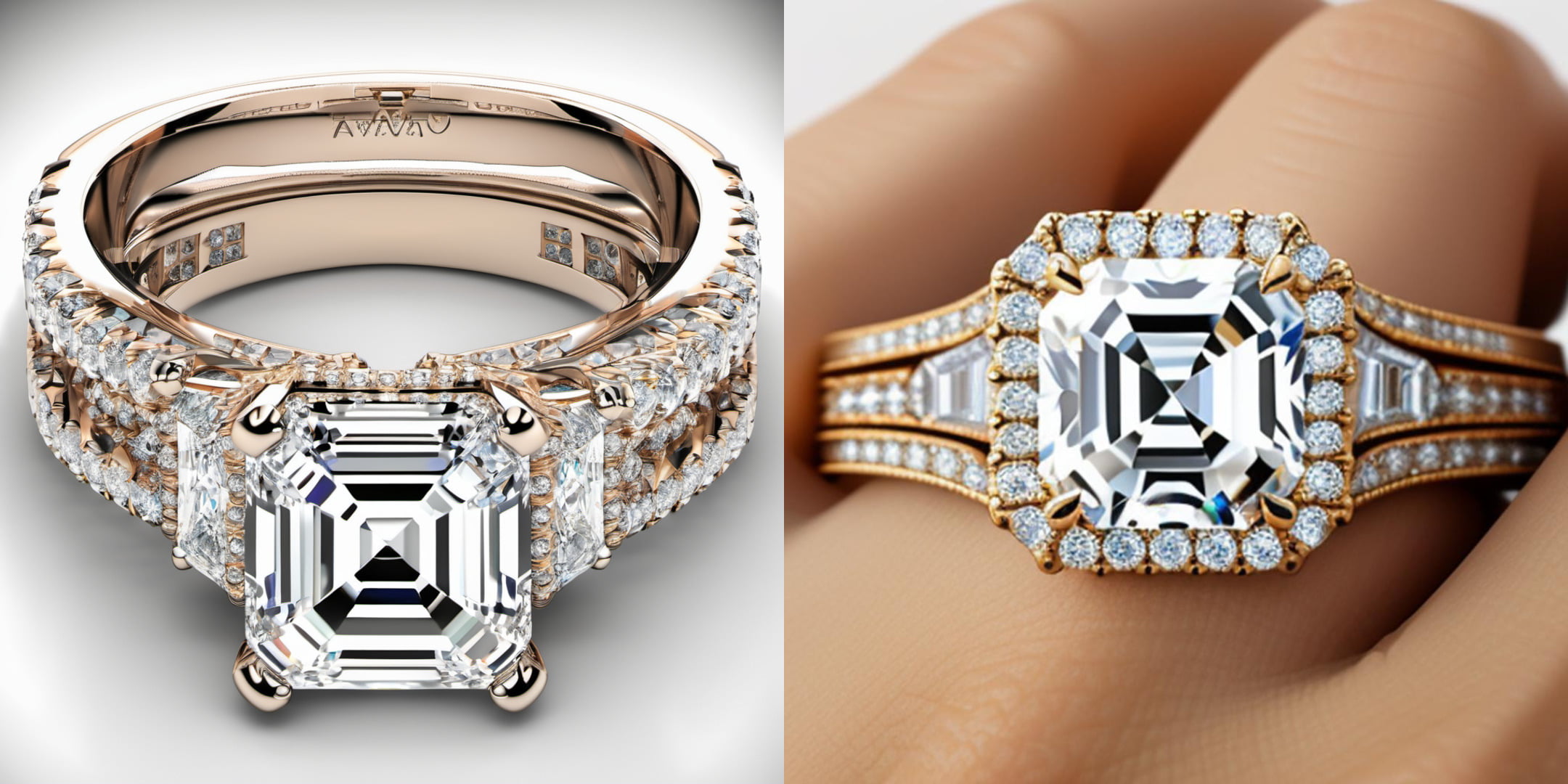
The Asscher cut was created by the Royal Asscher Diamond Company in Amsterdam in 1902. It’s a square step-cut diamond with deeply trimmed corners that give it an almost octagonal outline, and its concentric square facets create what’s often described as a “hall of mirrors” effect — a deep, hypnotic visual depth that’s very different from the fiery brilliance of modern brilliant cuts.
The original Asscher cut had 58 facets. The modern Royal Asscher cut, patented in 2001, has 74 facets and produces more brilliance while keeping the distinctive stepped character of the original. When shopping, you’ll see both versions — the original tends to appear in antique and estate pieces, while the modern version is more common in new jewelry.
How the Asscher cut differs from other step cuts
The Asscher cut is often compared to the emerald cut, which is also a step cut. The key differences:
Shape: An emerald cut is rectangular. An Asscher cut is square (or very nearly square — length-to-width ratio of 1.00-1.05 is ideal).
Corners: An emerald cut has slightly beveled corners. An Asscher cut has more dramatically cropped corners, giving it that distinctive octagonal silhouette.
Visual effect: Both cuts have less sparkle than brilliant cuts but more visual depth. The Asscher’s square shape and deeper pavilion create a more pronounced “hall of mirrors” effect than the emerald cut.
Character: Emerald cuts read as sleek and modern. Asscher cuts have an unmistakably vintage, Art Deco quality.
The 4Cs and what matters most for Asscher cuts
Clarity matters more than with brilliant cuts. Step cuts like the Asscher don’t hide inclusions behind sparkle the way round brilliants do — the open, mirror-like facets make inclusions more visible to the naked eye. For an Asscher cut, aim for VS2 clarity minimum, and VS1 or better if budget allows. Eye-clean is the standard to shop for.
Color is also more visible. The Asscher’s facets allow color to show more readily than brilliant cuts. For white gold or platinum settings, H color or better is recommended. For yellow gold settings (which warm the stone’s appearance), I or J color can work without looking noticeably yellow.
Cut quality for Asscher cuts is assessed differently than round brilliants since GIA doesn’t provide an overall cut grade for step cuts. Look for excellent or very good symmetry and polish grades, and aim for a length-to-width ratio between 1.00 and 1.05 for the classic square shape.
Carat weight looks slightly different in Asscher cuts than in round brilliants — Asscher cuts carry more of their weight in depth, so they can appear slightly smaller face-up than a round brilliant of the same carat weight. Factor this into your size expectations when shopping.
How the Asscher cut differs from other step cuts
The Asscher cut is often compared to the emerald cut, which is also a step cut. The key differences:
Shape: An emerald cut is rectangular. An Asscher cut is square (or very nearly square — length-to-width ratio of 1.00-1.05 is ideal).
Corners: An emerald cut has slightly beveled corners. An Asscher cut has more dramatically cropped corners, giving it that distinctive octagonal silhouette.
Visual effect: Both cuts have less sparkle than brilliant cuts but more visual depth. The Asscher’s square shape and deeper pavilion create a more pronounced “hall of mirrors” effect than the emerald cut.
Character: Emerald cuts read as sleek and modern. Asscher cuts have an unmistakably vintage, Art Deco quality.
The 4Cs and what matters most for Asscher cuts
Clarity matters more than with brilliant cuts. Step cuts like the Asscher don’t hide inclusions behind sparkle the way round brilliants do — the open, mirror-like facets make inclusions more visible to the naked eye. For an Asscher cut, aim for VS2 clarity minimum, and VS1 or better if budget allows. Eye-clean is the standard to shop for.
Color is also more visible. The Asscher’s facets allow color to show more readily than brilliant cuts. For white gold or platinum settings, H color or better is recommended. For yellow gold settings (which warm the stone’s appearance), I or J color can work without looking noticeably yellow.
Cut quality for Asscher cuts is assessed differently than round brilliants since GIA doesn’t provide an overall cut grade for step cuts. Look for excellent or very good symmetry and polish grades, and aim for a length-to-width ratio between 1.00 and 1.05 for the classic square shape.
Carat weight looks slightly different in Asscher cuts than in round brilliants — Asscher cuts carry more of their weight in depth, so they can appear slightly smaller face-up than a round brilliant of the same carat weight. Factor this into your size expectations when shopping.
The 8 best Asscher cut engagement ring styles
1. Solitaire in platinum or white gold The simplest and most classic presentation. A single Asscher cut diamond in a four-prong or bezel setting on a plain band lets the stone’s geometric character speak for itself. Platinum is the most complementary metal — its cool, silvery tone doesn’t add warmth that would work against the stone’s clean visual clarity.
2. Vintage-inspired solitaire with milgrain detail Milgrain edges (tiny beaded metal detailing along the band and setting) suit the Asscher cut’s Art Deco heritage perfectly. This style bridges the original era of the cut with contemporary wearability without looking like a costume piece.
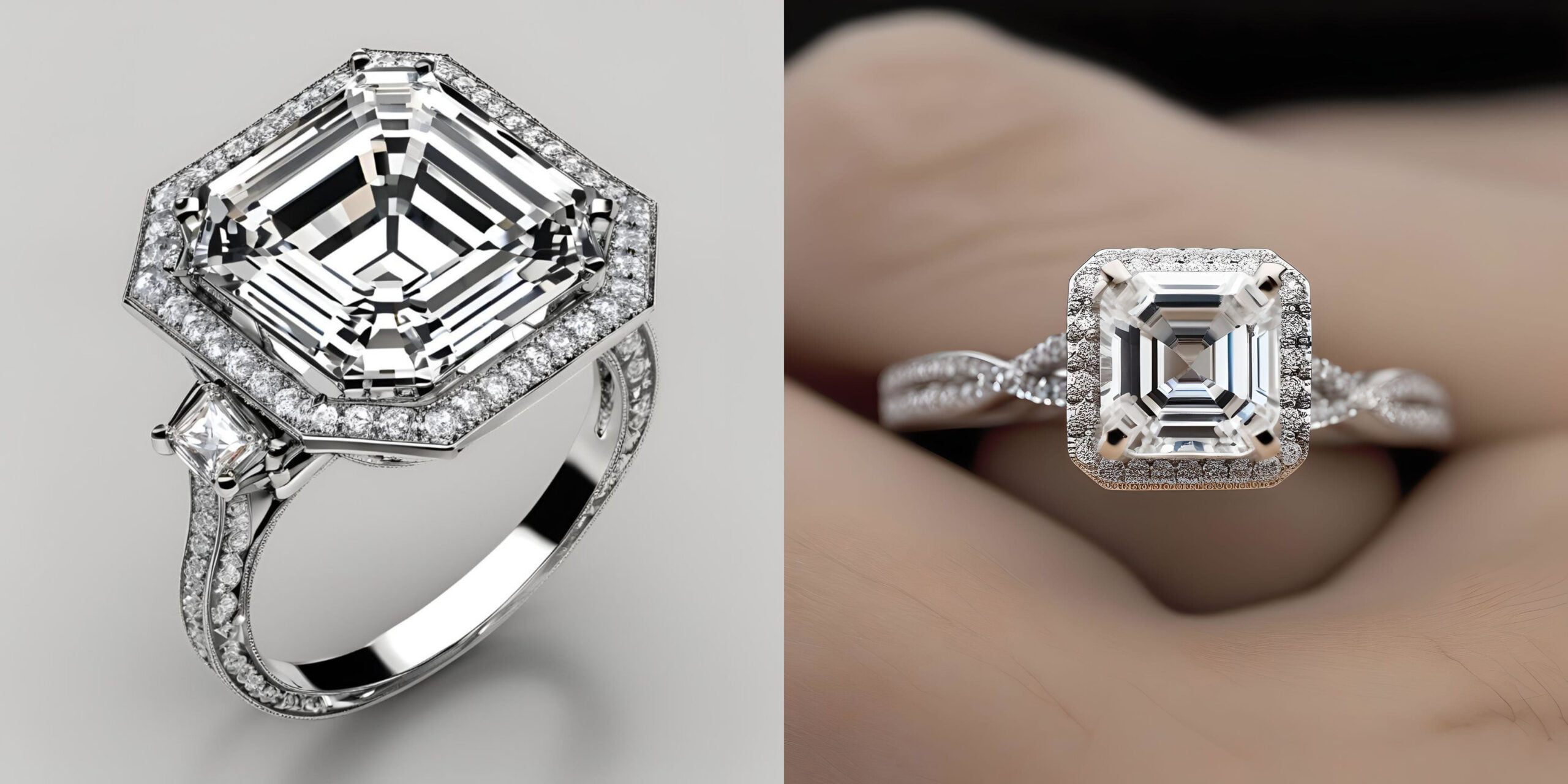
3. Halo setting A halo of small diamonds surrounding the Asscher center stone adds significant visual size and brilliance while keeping the distinctive stepped center as the focal point. For an Asscher cut, a square halo that mirrors the stone’s shape reads as more intentional than a round halo.
4. Three-stone setting A three-stone ring with an Asscher center stone and baguette side stones is one of the most historically accurate Art Deco combinations — baguette cuts were the dominant side stone style of the 1920s and 1930s when Asscher cuts were at their original peak of popularity.
5. East-west setting Setting the Asscher cut horizontally across the finger (rotated 45 degrees so a corner points toward the fingertip) creates a distinctive, unexpected look that’s become increasingly popular. This works particularly well for wider finger shapes.
6. Bezel setting A full bezel — where a band of metal encircles the entire stone — gives maximum protection for the Asscher’s corners while creating a sleek, modern counterpoint to the vintage character of the cut. This setting style suits minimal, contemporary jewelry aesthetics more than ornate vintage ones.
7. Pavé band An Asscher solitaire or halo on a pavé band (small diamonds set closely along the band surface) adds sparkle that the step-cut center stone itself doesn’t provide, creating a complementary balance between the geometric center and brilliant-cut band.
8. Colored stone Asscher alternatives Asscher cut sapphires, emeralds, and morganite are increasingly available and make compelling alternatives to diamond for buyers who want the cut’s geometric character with a specific color. Blue sapphire in an Asscher cut with a platinum halo has a particularly strong vintage sensibility.
Know More Heart and Arrow Diamonds: The Perfect Gift for Any Occasion in 2024
What to expect to pay
Asscher cut diamonds typically cost 10-20% less than round brilliant diamonds of comparable quality, because the step-cut facet pattern produces lower light performance scores that don’t translate well to standardized grading but look beautiful in person.
Entry-level Asscher cut engagement rings in sterling silver or 10K gold with smaller stones start from $300-600. Fine quality 14K white gold rings with 0.5-1.0 carat Asscher cut diamonds range from $1,500-4,000. Larger or higher-quality stones in 18K gold or platinum climb from $4,000 to $15,000+. Lab-grown Asscher cut diamonds are available at 60-80% lower prices than natural stones of equivalent size and quality.
Asscher cut vs round brilliant: which is right for you?
Choose an Asscher cut if you: prefer vintage or Art Deco aesthetics, want a ring that looks genuinely different from what most people wear, prioritize geometric precision over maximum sparkle, or are drawn to the “hall of mirrors” depth effect over surface brilliance.
Choose a round brilliant if you: want maximum sparkle and light performance, prefer a more universally classic look, or are less concerned with vintage character.
The Asscher cut is not a compromise choice or a budget alternative to round brilliants — it’s a distinct aesthetic preference. People who love it tend to love it specifically because of what sets it apart, not despite it.
Share this content:



Post Comment